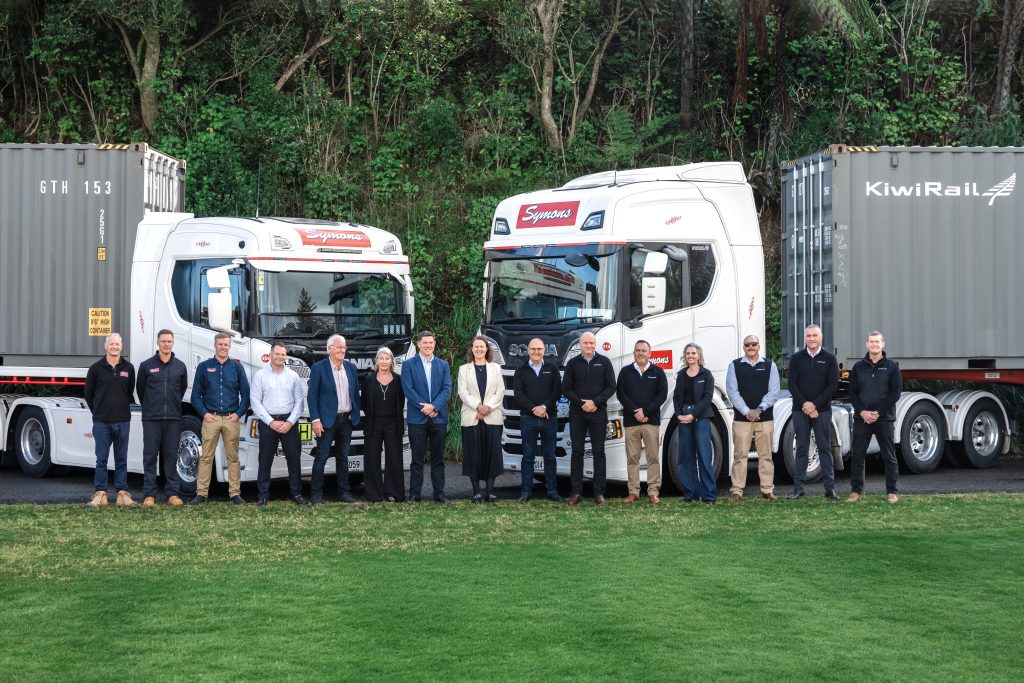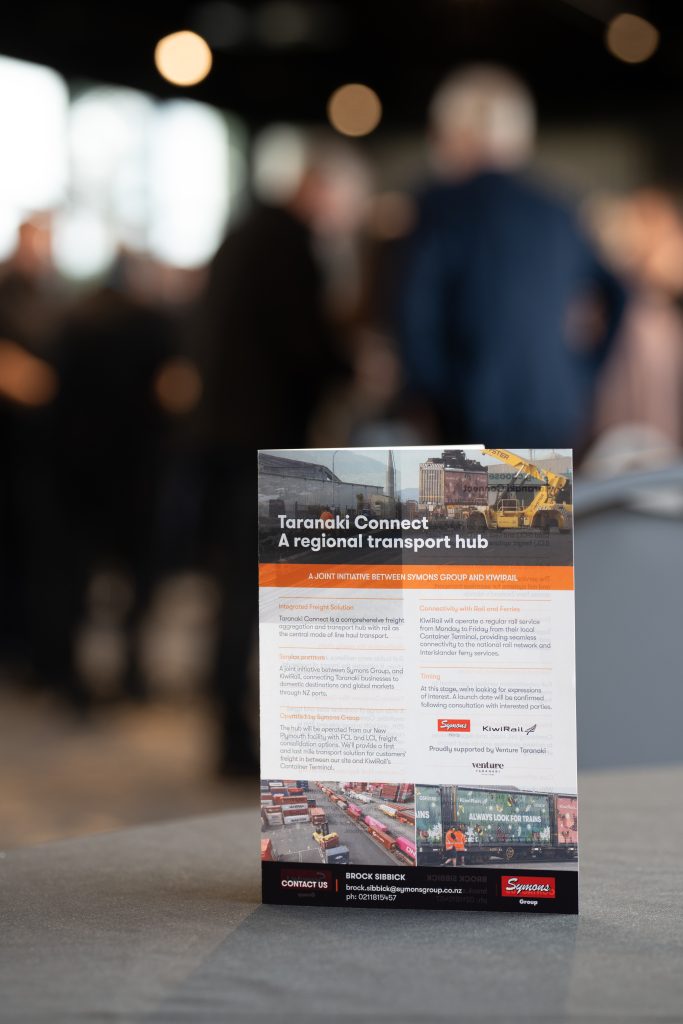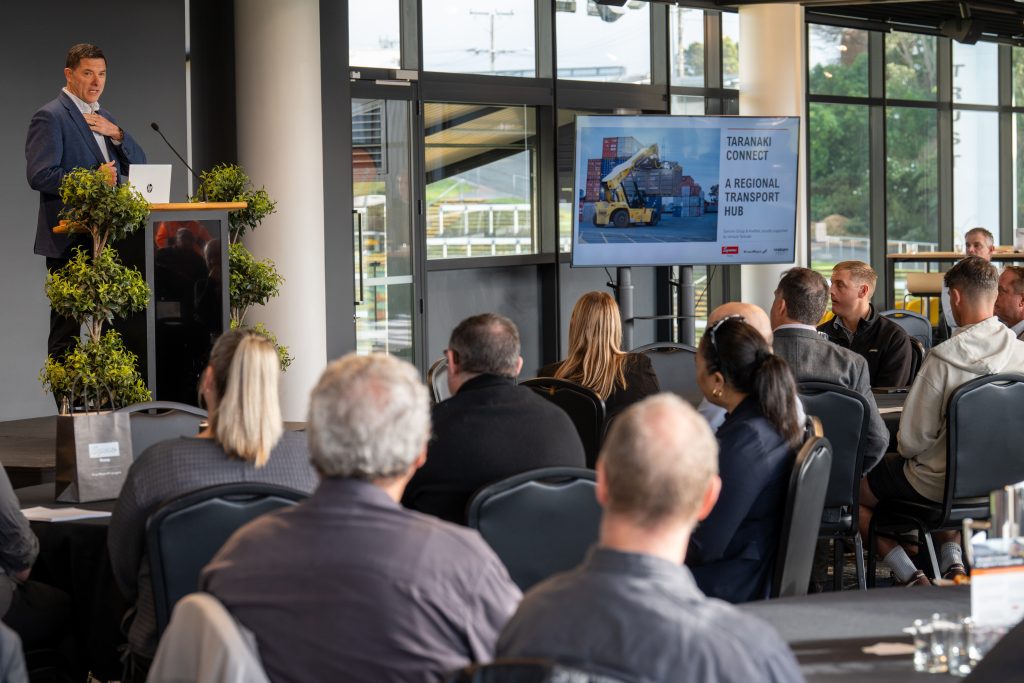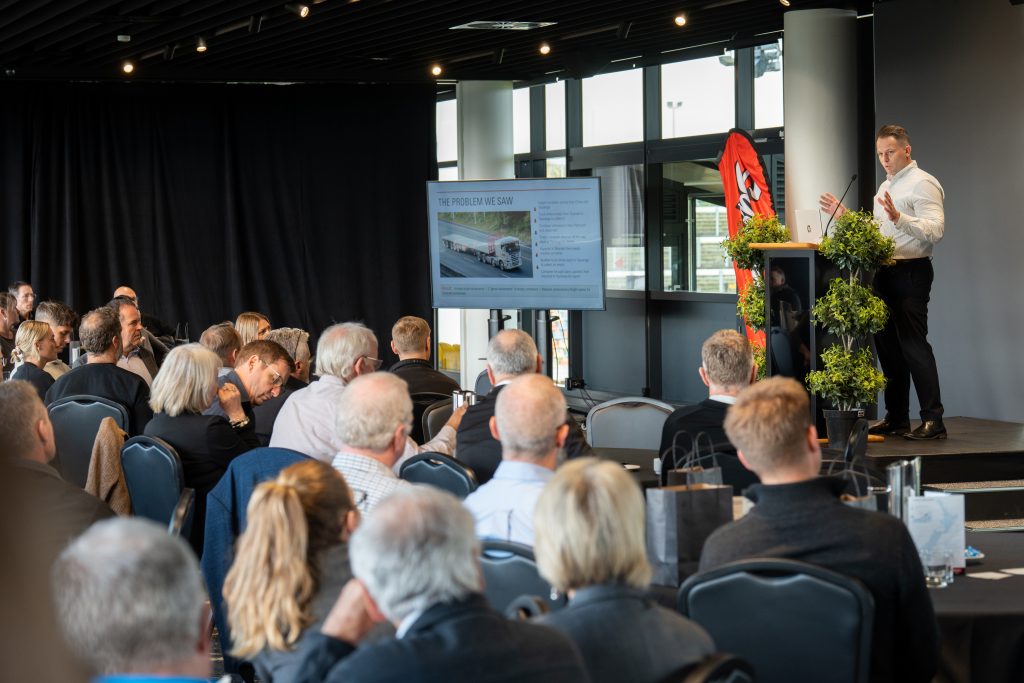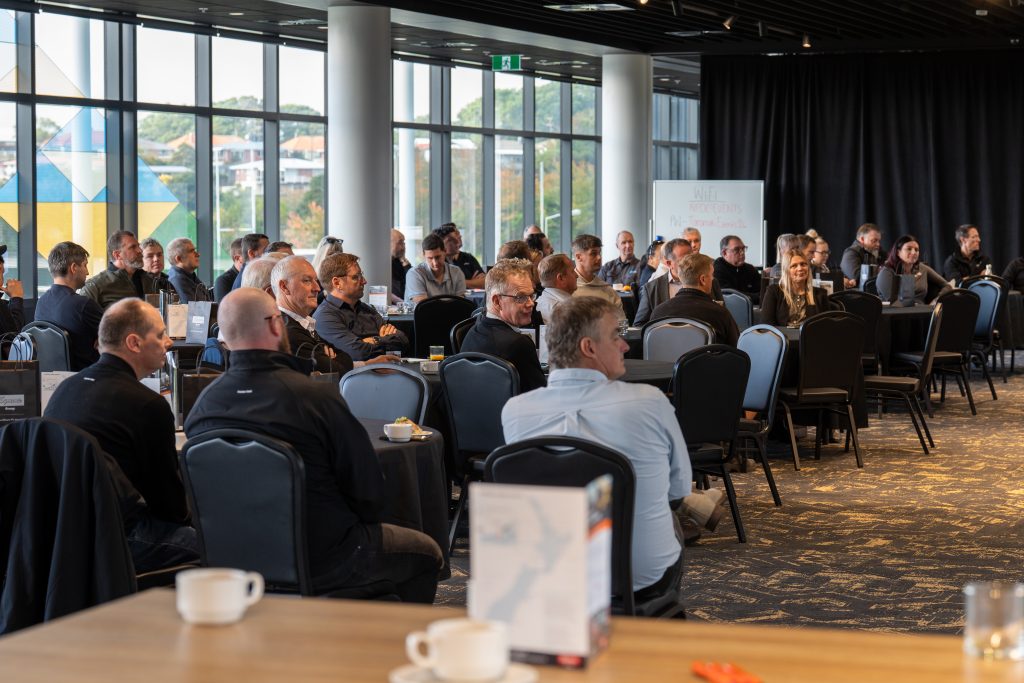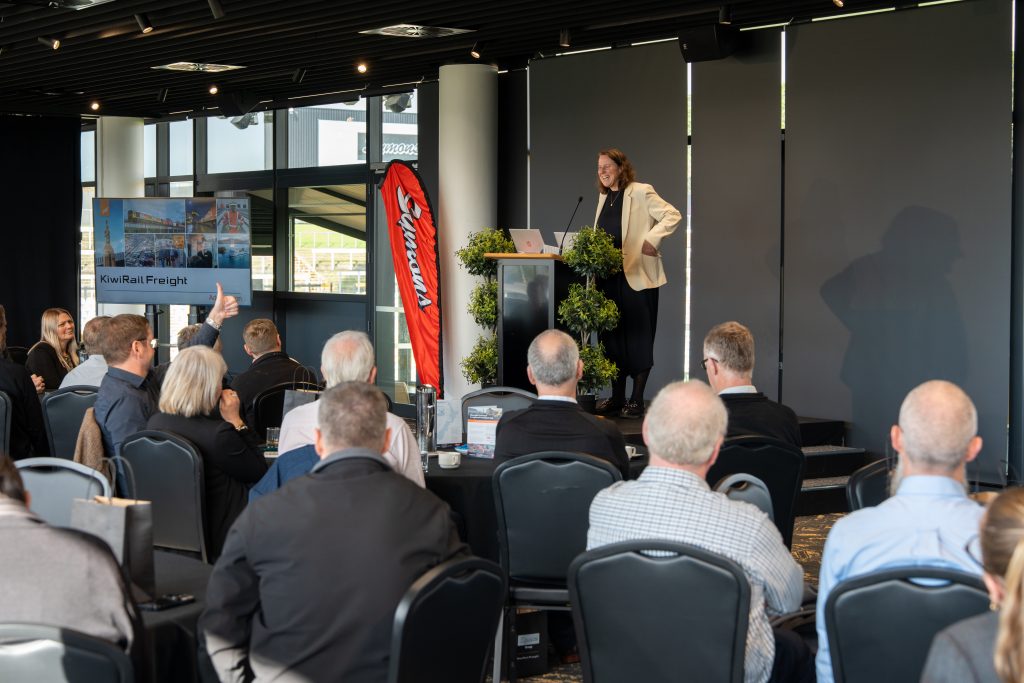
Momentum continues to build behind Taranaki Connect, with Symons Group and KiwiRail recently hosting a regional freight and supply chain event at Stadium Taranaki to further explore what smarter freight solutions could mean for Taranaki businesses.
The gathering brought together industry leaders, customers, and representatives from across the freight and logistics sector to discuss the future of freight in the region and how greater collaboration between road and rail can help create more resilient, efficient supply chains.
While Taranaki Connect was first introduced earlier this year as a new approach to improving freight efficiency through better integration of road and rail services, the recent event focused on bringing the concept to life and providing greater insight into how the model could evolve in practice.
Symons Group Managing Director Dean Eggers opened the event by reflecting on how the idea developed.
“What started as a conversation around solving practical freight challenges quickly became something much bigger,” Dean said.
“For a long time, Taranaki businesses have faced unnecessary costs and inefficiencies simply because of the way freight networks have traditionally operated. We saw an opportunity to think differently about how road, rail, containers, warehousing and regional infrastructure could work together rather than independently.”
The event highlighted the importance of collaboration across the wider supply chain, with KiwiRail sharing updates on its ongoing investment into rail infrastructure and the broader role rail can play in supporting regional economic growth.
Brock Sibbick, Group Sales Manager at Symons Group, expanded on how Taranaki Connect aims to simplify freight movements and reduce unnecessary transport activity by creating stronger connections between importers, exporters, transport operators, shipping lines and logistics providers.
“At its heart, this is about making the supply chain work smarter,” Brock explained.
“Historically, import and export movements have often operated separately, even when the opportunities to connect them existed right here in the region. By creating better alignment between those movements, we can reduce wasted transport, improve efficiency, and create more flexible freight options for local businesses.”
The concept centres around establishing greater local capability within Taranaki, including container handling, storage, dehire and reuse options through the New Plymouth Container Terminal. By reducing the need for empty containers to travel unnecessarily between regions, the initiative has the potential to lower transport costs, reduce congestion, and improve overall supply chain resilience.
The choice of venue also reflected the theme of the day. Much like Stadium Taranaki itself — a significant investment in regional infrastructure designed to support the community long into the future — Taranaki Connect represents a forward-looking approach focused on strengthening the region’s long-term connectivity and economic resilience.
Recent weather events and ongoing pressure on transport networks have reinforced the importance of resilient freight options for businesses across the region. The event explored how road and rail can complement one another — with rail providing efficient long-distance freight movement and road transport delivering the flexibility and responsiveness required at each end of the supply chain.
Importantly, discussions throughout the day extended beyond international containers alone. Opportunities around domestic freight, warehousing, distribution, and broader supply chain optimisation were also explored as part of the longer-term vision for the initiative.
For Symons Group, the project aligns closely with its wider commitment to supporting regional business growth and helping ensure Taranaki remains well connected to both domestic and international markets.
“There’s a genuine opportunity here for Taranaki businesses to rethink parts of their supply chain and unlock efficiencies that may not have previously been visible,” Dean said.
“This isn’t just about transport — it’s about creating better connections across the region and building infrastructure and partnerships that support long-term growth.”
The strong turnout and engagement from businesses across the region highlighted the growing interest in collaborative freight solutions and the role initiatives like Taranaki Connect may play in shaping the future of freight in Taranaki.